Starting this week we're beginning a new series I'd like to call the Thursday Thinkpiece. Some things that have been noodling around in my brain for some time with some of it fit to print.
For over a decade, Plex was the main gateway into home media servers for tech enthusiasts, DIYers, and homelabbers alike. If you're unfamiliar with it, think of Plex as your own private, self-hosted Netflix or Spotify. You don't need an expensive server rack or a dedicated lab to run it: you can easily install the server software on an old spare laptop, an unused desktop PC, a simple NAS, or even an external hard drive plugged into a Raspberry Pi holding your personal movie, TV show, and music files. Plex then automatically organizes your libraries, pulls in poster artwork and movie details, and streams your content seamlessly across a huge range of devices. Whether on LG webOS, Samsung Tizen, Apple TV, Roku, Fire TV, iOS, Android, or game consoles, Plex made it insanely easy for anyone in the house to log in and watch or listen to their content instantly.
My own media streaming journey actually started way back in late 2002 / 2003 with the early days of XBMC (Xbox Media Center) running on the original modded Xbox console. Back then, managing a home media center meant spending endless hours manually scraping artwork, tweaking NFO files, and messing around with XML settings. But as life got busier, I simply didn't have the time to go deep into the metadata side of things anymore. That's when I switched to Plex, because it just worked straight out of the box without a lot of messing around.
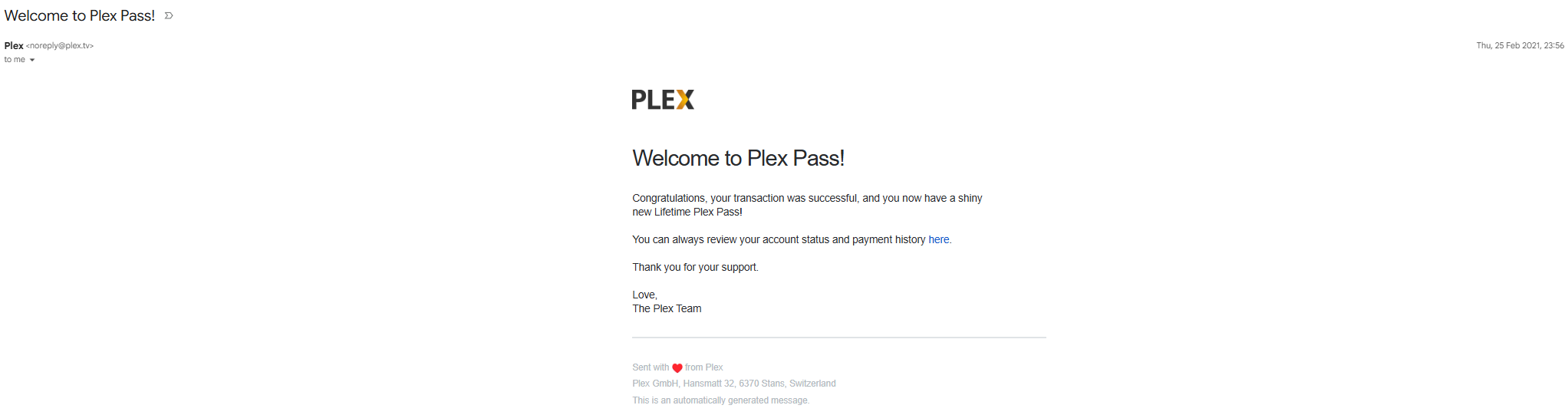
Having relied on Plex for years after making that transition from XBMC, I bought a Lifetime Plex Pass for $74.99 USD (~£54 GBP) during a sale in February 2021, right in the middle of the pandemic lockdowns. Being stuck at home meant spending a lot more time refining my at-home services, and that era became the turning point where I truly threw myself into self-hosting and expanded my setup. Buying the lifetime pass felt right: it was a way of giving back to a project that kept my household entertainment running smoothly after years of free use, while also unlocking Plex Pass features like hardware-accelerated GPU transcoding, mobile sync, and intro skipping.
But over the last few years, the atmosphere surrounding Plex has shifted. The software has experienced a slow shift toward corporate creep (or "enshittification"), where a company slowly prioritizes corporate deals and advertising over its original core users.
As a long-time self-hoster who values complete control over my hardware and setup, watching this change has been an eye-opening lesson in tech ownership. It shows why it may be time to move to Jellyfin for true system freedom, while also examining the open-source reality of what it takes to support community alternatives long-term.
1. From Personal Server to Ad-Supported Distributor
Plex’s core business model has pivoted. Originally, they sold server software via the Plex Pass. Today, Plex’s main focus is becoming a centralized, ad-supported free streaming service (competing with PlutoTV or Tubi) backed by major studio licensing deals.
To be fair, sponsored content and Free Ad-supported Streaming TV (FAST) channels are great for casual viewers who don't host their own media. Having free movies and live channels available out-of-the-box adds genuine convenience for millions of users. However, these commercial content deals have subtly shifted Plex's focus away from its original mission: serving your own personal media seamlessly.
Open the default Plex app on a new device today, and your personal server’s libraries are buried. Instead, the home screen's populated by Plex’s own free ad-supported movies, sponsored TV channels, and commercial rows. While you can hide these in the settings, the fact that a self-hosted server defaults to pushing external ad-supported media shows where Plex’s engineering priorities and corporate revenue now lie.
Studio Pressure & Corporate Alignment: Crackdowns and Remote Watch Passes
As Plex partnered with major Hollywood studios to license free streaming content, corporate pressure mounted to clean up its platform and align with commercial streaming standards:
- The Commercial Host Crackdown: Plex began aggressively targeting accounts selling access to commercial Plex servers. This escalated into blanket bans on major cloud hosting providers (like banning entire Hetzner and OVH server IP ranges) and purging accounts tied to paid library sharing. While stopping illegal server sales makes sense legally, banning entire data center IP ranges also hurt regular homelabbers who simply hosted their own private servers off-site.
- Subscription Gating & Remote Watch Passes: To satisfy content partners and monetize out-of-home viewers, Plex introduced new subscription friction like Remote Watch Passes (requiring remote viewers or server owners to pay for out-of-home playback) while tightening how Lifetime Plex Pass benefits apply across shared accounts. What was once seamless, open sharing among family has increasingly been restructured into gated corporate tiers.
2. The Centralized Authentication Trap
From a system control standpoint, Plex has a single point of failure that breaks the fundamental promise of owning your server: Centralized Authentication.
When you log in to your Plex server, you don't authenticate locally against your host database. Instead, your app redirects to Plex.tv to log in via their central servers, which then sends a key back to unlock access to your local hardware.
- The Outage Risk: Recurring authentication outages tracked on Status.Plex.tv, as well as major incidents covered by high-authority tech publications like BleepingComputer and How-To Geek, have showed just how risky this setup is. When Plex's cloud infrastructure experiences downtime or DNS disruptions, thousands of users worldwide (including paying Plex Pass subscribers) find themselves locked out of their own local servers sitting right in their living rooms, unable to stream local files unless they've already set up offline network settings in advance.
- The Data Collection Concern: Every time a user opens your Plex app, they're talking to Plex's central servers. Plex collects data on when you watch, what device you stream on, and what items exist in your watchlists.
Compare this to Jellyfin: authentication's 100% local. Your Jellyfin server is an independent, self-contained unit. If the internet connection drops or central servers fail, your local login and local streaming remain completely unaffected. You're retaining total freedom over your own hardware.
3. Scope Creep and Feature Churn: Improved Downloads vs. Deprecated Features
Plex's feature development roadmap has been a mixed bag of great technical fixes alongside frustrating feature removals:
- The Good: Mobile Downloads Finally Work: To Plex's credit, core features like Mobile Downloads (Sync), which were notoriously buggy and unreliable for years, have recently seen dedicated engineering focus and now work vastly better and more reliably across iOS and Android devices.
- The Bad: Deprecated Features Like Watch Together: Conversely, users frequently face the frustration of beloved features being pulled out from under them. Features like Watch Together, which became an essential lifeline during the pandemic for synchronized remote viewing with friends and family, have been phased out or removed, leaving long-time users disappointed when tools they relied on disappear.
- Social Additions: Meanwhile, features like Plex Discover (which directs users to commercial streaming services) and Social Activity Feeds pull engineering attention toward engagement metrics and data collection, further drifting away from the core mission of managing personal local media.
4. The Open-Source Response: Why Jellyfin Wins (And My Recommendation for Newcomers)
This corporate shift is exactly why Jellyfin (forked from Emby when Emby went closed-source in 2018) won the hearts of the homelab community.
I've spun up Jellyfin in my own homelab alongside Plex to test its performance, client apps, and local reliability. Jellyfin is built on a simple, refreshing premise: It's your server, your media, and your data.
- No Central Account: You don't register an account with a central server. User accounts are created locally on your hardware.
- Zero Tracking: There aren't any corporate tracking metrics, ad rows, or forced discoverability features.
- Free Native Hardware Transcoding: Premium features that Plex charges for (like GPU hardware transcoding for smooth playback) are completely free in Jellyfin.
The Client Ecosystem Trade-Off: Corporate Standard vs. Scattered Community Apps
A realistic comparison between the two platforms also comes down to client availability and app stability:
- Plex's Unbeatable Reach: Because Plex operates as a commercial company with dedicated app development teams, they maintain rock-solid native apps across virtually every Smart TV app store worldwide (LG webOS, Samsung Tizen, Apple TV, Roku, Fire TV, PlayStation, Xbox). Non-technical family members can download the app and start watching instantly without tinkering.
- Jellyfin's Scattered Client Reality: Jellyfin has client apps (such as Android TV, Swiftfin for iOS/Apple TV, Roku, and web interfaces), but because there isn't a single company managing them, client development is split across separate volunteer projects. As a result, apps aren't always rock-solid or feature-complete on every screen. A video file that plays smoothly on Android TV might crash on a Smart TV app wrapper, and native apps aren't always easily available on older TV app stores.
My Advice for Newcomers: If you're getting into self-hosting today and building your first home server, I strongly suggest starting with Jellyfin. You avoid corporate bloat, mandatory cloud logins, and paywalled features right out of the box; just keep in mind which TV devices your household uses.
5. The Open-Source Reality Check: Burnout, Governance, and the July 2026 Leadership Shakeup
While Jellyfin represents the gold standard for true system control and personal freedom, open source isn't immune to crises of its own.
In July 2026, the Jellyfin project experienced a massive leadership transition when several core maintainers, including Project Leader Joshua Boniface, Core Team Member Anthony Lavado, and Co-founder Andrew Rabert, announced their departures within days of each other.
This high-profile exit highlighted a growing challenge across open-source software:
- Maintainer Burnout: Supporting millions of users as an unpaid side project takes a heavy mental toll.
- Unrealistic Expectations: As homelab setups grow in popularity, volunteer developers increasingly face demanding end-user expectations, with users expecting unpaid volunteers to act like 24/7 paid support teams.
- The AI-Generated PR Deluge: Modern maintainers face a flood of low-quality, AI-generated code submissions that clutter issue trackers, forcing maintainers to spend hours auditing unverified code instead of building features.
This news is an important reality check for homelabbers. When proprietary platforms like Plex restrict system freedom, we turn to open-source alternatives. But open source only survives if the community actively supports it.
6. Early Adopter Reality: Why I Still Use Plex (And Why I Run Jellyfin in Parallel)
Looking at both sides of the coin reveals an important truth: self-hosting isn't an all-or-nothing choice.
As an early adopter who built my setup around Plex over nearly a decade, I still use Plex every single day. For an existing setup that's running smoothly, the classic homelab rule applies: if it ain't broke, don't fix it.
I've set up Jellyfin myself alongside Plex in my homelab, and I run both servers in parallel. I follow Jellyfin's development closely, and one day, when the client app ecosystem and project maturity reach the right point, I may very well flick the switch and migrate 100%. But full migration isn't for me just yet; Plex remains my primary daily driver.
This sentiment shift isn't unique to my homelab either. Even Linus Sebastian from Linus Tech Tips (LTT), historically one of Plex's biggest supporters online, slowly started complaining more about Plex's trajectory. On The WAN Show and LTT videos, Linus voiced growing frustration over cloud authentication lockouts, corporate pivots, and software bloat. Eventually, Linus Tech Tips went on to produce dedicated video content showcasing open-source alternatives like Jellyfin, showing how widespread the desire for self-hosted alternatives has become across tech culture.
When I bought my Lifetime Plex Pass back in February 2021 for $74.99 (~£54 GBP), the math made complete sense. Over the last 5.5 years (roughly 66 months of continuous daily use), that initial purchase works out to just ~£9.80 per year (or roughly 82p / $1.13 per month).
And chief among the tools justifying that purchase is Plexamp.
Plexamp is an absolute masterpiece of audio engineering. By self-hosting my music collection and streaming it via Plexamp, whether listening on mobile devices, home audio systems, or in the car via Android Auto and Apple CarPlay, I was able to completely stop paying for monthly subscriptions to Spotify and Amazon Music.
At ~£10.99/month ($11.99/month) for a commercial music streaming subscription, Plexamp paid for my Lifetime Pass within five months. Over 5.5 years, it's saved me well over £700 ($900) in recurring music streaming bills.
To Plex's credit, they've been remarkably good at adding value to the Lifetime Pass over the years, rolling out tools like Plexamp, intro skipping, hardware transcoding, and mobile downloads without asking early pass holders for another penny. Even if Plex eventually alters its terms down the road, I've undoubtedly gotten my money's worth out of that $75 purchase, and many other long-time users feel the exact same way.
But it raises a bigger question for the tech industry: Is a one-time lifetime license model actually sustainable long-term?
History shows how rare it is for tech companies to honor lifetime promises forever as cloud infrastructure costs and investor pressures grow. Major tech media coverage highlights how lifetime deals have been altered or revoked across the industry before:
- TiVo: Sold popular "Lifetime Service" passes for DVRs, but as reported by The Verge, TiVo eventually phased out hardware lines, shut down guide data servers, and left legacy devices non-functional.
- SiriusXM: Sold $500 "Lifetime" satellite radio subscriptions, but restricted device transfers and added hidden fees, resulting in a major nationwide class-action lawsuit detailed by Courthouse News.
- LogMeIn: Famously eliminated its popular "free for life" remote access tier with just seven days' notice to force users onto paid plans, as covered by TechCrunch.
- Evernote & Malwarebytes: Malwarebytes grandfathered early lifetime keys before shifting strictly to annual plans, while Evernote stripped features out of legacy accounts to push users into new paid tiers, as reported by The Verge.
The MRR Trap: Can Chasing Subscriptions Go On Forever?
In today's software landscape, both solo developers and massive tech corporations are hyper-focused on securing Monthly Recurring Revenue (MRR). To chase predictable recurring cash flow, companies increasingly rely on sneaky tactics: locking existing local features behind paywalls, adding unexpected subscription gates, and quietly changing terms of service to turn one-time buyers into permanent renters.
It raises a critical question for both creators and consumers: Can this endless pursuit of MRR through sneaky tactics really go on forever? When software transitions from serving users to extracting monthly rent for hardware sitting in your own living room, it creates a deep trust deficit that drives users straight to open-source alternatives.
When a company realizes one-time lifetime payments can't fund perpetual development and server hosting, they inevitably pivot toward ad networks, locked feature tiers, or price hikes, which is precisely what we're watching unfold with Plex today.
The Problem Today: Huge Price Increases & Eroding Value
However, what made financial sense in 2021 looks completely unrecognizable today. Historically, prospective homelabbers knew they could rely on Plex's regular annual sales events, such as Black Friday, Cyber Monday, February anniversary sales, Pro Days, or targeted email promo codes offering lifetime passes for $75 to $90.
For years, standard community advice for newcomers was simple: "Just hold off and wait for the Black Friday sale."
Many users held off for months or years expecting those familiar discounts to return. But people were caught completely off-guard when Plex silently ended those sales events and instead hit the community with massive price hikes, covered across major tech media outlets like AppleInsider and official Plex Pass documentation:
- The Lifetime Pass: Historically $119.99 USD (and $75–$90 during sales), Plex first increased it to $249.99, before skyrocketing the Lifetime Plex Pass to an eye-watering $749.99 USD (~£595+ GBP) in July 2026.
- New 5-Year Tier: Alongside the $750 lifetime price tag, Plex introduced a 5-Year Pass at $249.99 USD, effectively shifting what was once a true lifetime purchase into an expensive multi-year subscription cycle.
- The Monthly Alternative: Granted, you don't have to pay $750 up-front, as Plex still offers a monthly subscription at $6.99 / £6.99 per month.
But that brings us to a fundamental question for self-hosters: Should you really have to pay a recurring monthly rent to a third-party company just to access and unlock features (like GPU hardware transcoding) on hardware you bought and own in your own home?
Asking a new user to pay $750 up-front (or shell out $6.99 every single month indefinitely) for software that increasingly buries your personal media below ad-supported FAST channels, pushes commercial studio content, and locks your local server out during cloud authentication outages feels really hard to justify. When Jellyfin provides native GPU hardware transcoding, local multi-user auth, and full media streaming for $0, the reason to buy into Plex today just isn't there anymore for anyone starting fresh.
The Pragmatic Verdict: Complete System Freedom & Active Stewardship
The debate between Plex and Jellyfin isn't about rigid tech dogma; it's about practical utility and freedom.
- If you're starting out today: Go with Jellyfin. It gives you total control over your hardware without cloud gatekeeping or corporate ad clutter.
- If you're a long-time Plex Pass user: There's zero shame in keeping Plex as your daily driver while running Jellyfin alongside it in your home setup. Running both in parallel lets you enjoy tools like Plexamp today while positioning your infrastructure to flick the switch over completely when Jellyfin reaches full client maturity.
However, we can't treat open-source projects as "free enterprise software." If we want alternatives like Jellyfin to thrive alongside commercial tools, tech enthusiasts, DIYers and homelabbers must actively contribute back, whether through financial sponsorship, documentation improvements, code reviews, or setting healthy community boundaries. If you enjoy using Jellyfin or want to help the maintainers out, consider donating to the Jellyfin project to help support ongoing development and infrastructure.
At the end of the day, I really like Plex, and to be clear, Plex isn't evil. They're walking a tough corporate tightrope, trying to serve millions of different users while remaining as legally compliant as possible with major Hollywood studios and copyright regulations.
Managing a commercial business at that scale is no easy feat, and Plex may very well surprise us all down the road as they continue evolving. I've used Plex for a decade, and I'll continue using it as my primary daily driver alongside Jellyfin.
But open-source projects like Jellyfin still deserve their flowers. Having a robust, community-driven alternative is vital for healthy competition overall: keeping commercial platforms honest, preventing total vendor lock-in and guaranteeing that tech enthusiasts always have a path to complete system freedom.
Don't forget to explore the rest of our website as we build out more content. Stay tuned for more tutorials, tips, and tricks to help you make tech work for you.
If you want to stay up-to-date with regular updates, make sure to subscribe to our free mailing list.